
My husband and I always dreamed of having three children. We even had three names picked out—one boy and two girls.
Our son came first, easily. I became pregnant within three months, and he was born when I was 31. The ease of that pregnancy made the challenges to come all the more unexpected.
When I was 32, I became pregnant again, but lost the baby in a miscarriage. After that, another pregnancy never came.
At 35, we tried IUI, but it didn’t work. I didn’t want to move on to ICSI right away—it felt physically and mentally exhausting. Somewhere inside, we held onto hope that maybe it would happen naturally again, or that my wish for another child might eventually soften—that we could find acceptance.
By my 37th birthday, however, our desire for another child remained undiminished, and we decided to try ICSI.
In the first round, one egg was retrieved and fertilized, but I had a period before it could implant. In the second round, no eggs could be retrieved, and I was diagnosed with early menopause.
It was a quiet, clinical declaration—but it changed everything.
People didn’t always know what to say.
“But you already have one child, be grateful,” they’d say.
“You’re lucky.”
And yes, I am profoundly grateful for my son.
Yet that gratitude does not erase the ache—the longing for the children we would never hold.
That grief exists alongside joy.
But it is often invisible and unspoken.
Writing became my way to give shape to these feelings—to hold space for the longing, the frustration, the deep ache of dreams unfulfilled.
In the Netherlands, I explored these themes in my novel Het is goed zo, which resonated with many readers who recognized themselves in the story. I received countless messages from people expressing relief at feeling seen.
I also received angry responses—people who called me spoiled, who believed I had no right to grieve because they themselves had no children.
Those reactions confirmed something important: how much more attention this topic needs.
Grief cannot be measured against someone else’s experience.
All sorrow deserves space to be felt and processed.
This is why I published the English translation as an ebook, The Life I Have (available on Amazon)—to reach people beyond the Netherlands who may be carrying the same quiet grief.
By sharing my story in English, I hope to offer connection, understanding, and validation to others navigating secondary infertility.
Secondary infertility taught me that joy and grief are not mutually exclusive.
Loving my son does not erase the sorrow for the children we never had.
Recognizing this duality is not a contradiction—it is reality.
Some days, I can hold both feelings at once.
Other days, one overshadows the other.
The tension between hope, acceptance, and longing defines this journey in a way that is often invisible to those outside of it.
Healing begins with acknowledgment.
Grief that is ignored or minimized festers quietly, often accompanied by feelings of inadequacy or failure.
By allowing ourselves to feel both joy and sorrow, we create space for honest processing.
Naming the pain.
Speaking it out loud.
Connecting with others who understand.
That is how we begin to find balance—between acceptance and longing, between gratitude and mourning.
It is in this tension that resilience forms.
Secondary infertility is also deeply intertwined with identity.
For those of us who envisioned a larger family, the shift in expectations can feel like a personal failure—despite being entirely out of our control.
Our bodies betray the dreams we held.
We move through milestones with mixed emotions. Watching our child start school, for example, while quietly grieving the milestones we imagined with other children.
These experiences reshape how we see ourselves, how we engage with others, and how we move through the world.
Acknowledging that loss—and its impact on identity—is essential to moving forward with compassion for ourselves.
I have learned that sharing these stories is not only therapeutic for me, but transformative for others.
People reach out to say they feel seen.
That their emotions—once hidden or dismissed—are valid.
Friends and partners begin to understand experiences that once felt invisible.
Conversations around secondary infertility break the silence.
And in doing so, they break the isolation.
Recognizing grief alongside joy allows us to fully inhabit both—without guilt or self-reproach.
It is an act of honesty.
With ourselves, and with those around us.
Secondary infertility is painful, widespread, and often overlooked.
But it does not have to remain silent.
Sharing these experiences creates connection.
It builds understanding.
It reminds us that no one has to navigate this alone.
Ultimately, secondary infertility teaches us about resilience, emotional honesty, and the capacity to hold conflicting emotions at once.
It asks us to witness our own desires.
To sit with disappointment.
To allow ourselves to feel deeply.
Grieving what we cannot have is not a failure.
Honoring that grief—alongside our joy—is part of healing.
By sharing my story, I hope to make secondary infertility more visible.
To offer connection to those who are living it.
And to foster empathy in those who have not experienced it.
Because through honesty, reflection, and conversation—
we make space for understanding, compassion, and a path forward that holds both what is… and what could have been.
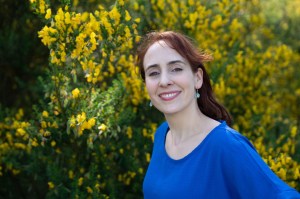
Dutch actress and writer
About the Author
Relinde de Graaff is an actress and writer based in the Netherlands. Her work is shaped by a strong sense of connection and explores themes of identity, relationships, and the human experience, often with a touch of humor. In her novel Het is goed zo, she weaves in themes of motherhood and grief around secondary infertility, resonating with many readers. The book is now also available in English as the ebook The Life I Have. More of her work can be found at relindedegraaff.com.


Leave a Reply